BONSAI ART Award Chuhin at the Trophy 2024
published in BONSAI ART 186, by Mauro Stemberger
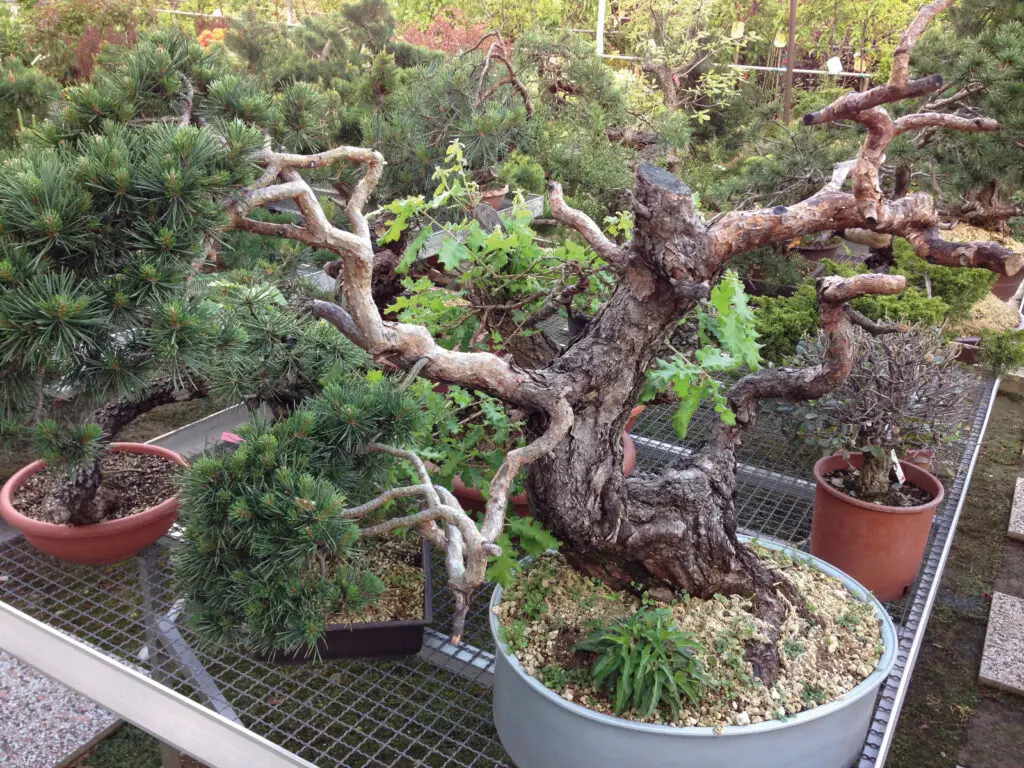
The story of this bonsai began in 2010 in the mountains on the border between Italy and France, where my Italian bonsai friends Giorgio Castagneri and Gino Costa found the pine and dug it up. I noticed the tree at Giorgio’s summer party and bought it in 2012, because although it had no top and didn’t look very attractive with its long, bare branches, I could see the tree’s great potential.
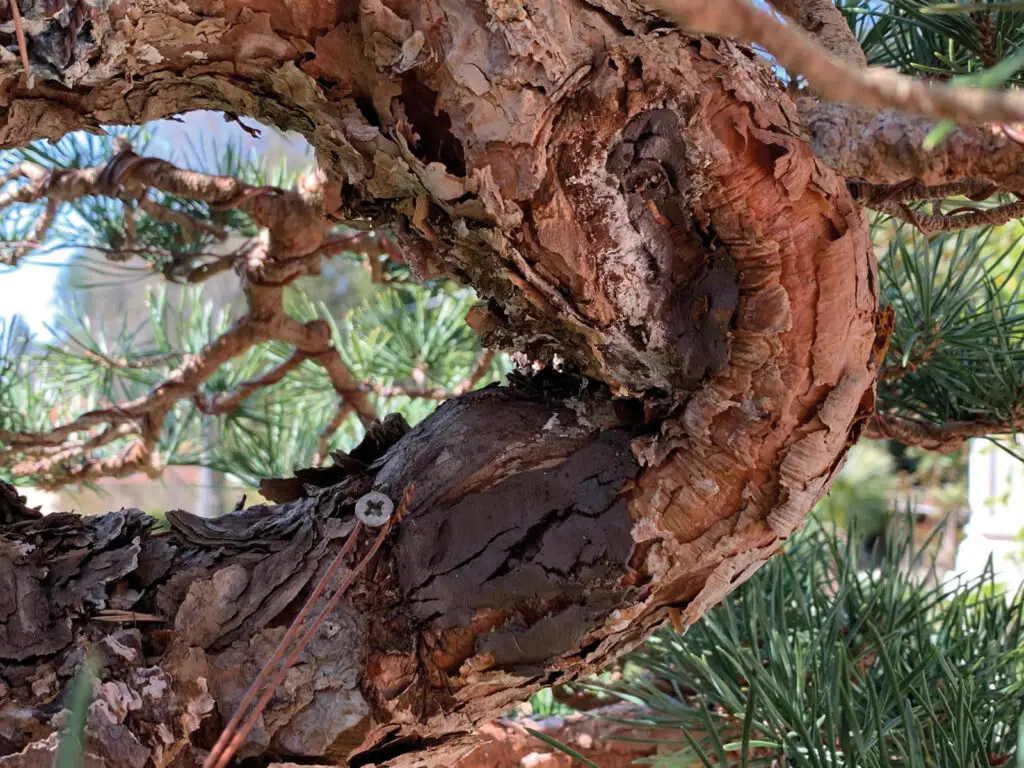
After an appropriate recovery phase, the design began in March 2013 with the upper right branch being bent around the trunk and its deadwood. To do this, the branch had to be partially hollowed out to make it flexible enough. The lower branch was slowly brought into a more compact shape with tensioning wires over the years 2014 and 2015, while the pine was otherwise allowed to recover and gather strength.
In 2016, the first thorough shaping of the forest
pine took place as part of my demo at the UBI (Unione Bonsaiisti Italiani) exhibition, with the active help of my team (Rudy, Paolo, Alessandro and Maryanyela). We built a solid branch structure around the trunk and formed two crowns, because the lower branch was simply too big to support just a foliage cushion. We were very happy with the result afterwards and I had the feeling that the tree was too.
After such basic shaping, I leave the tree to grow freely for a season so that it can recover and the positions of the wired branches and twigs can be consolidated. The greater the stress caused by the shaping measures, the longer the subsequent recovery phase must last. This is an important step in bringing the tree closer to the refinement phase.
The tree was then cared for for several years by my friend Paolo in Varese, where uniform foliage and compact branching were only developed by working the candles in spring. The wires placed during the initial shaping were gradually removed as soon as they began to cut in.
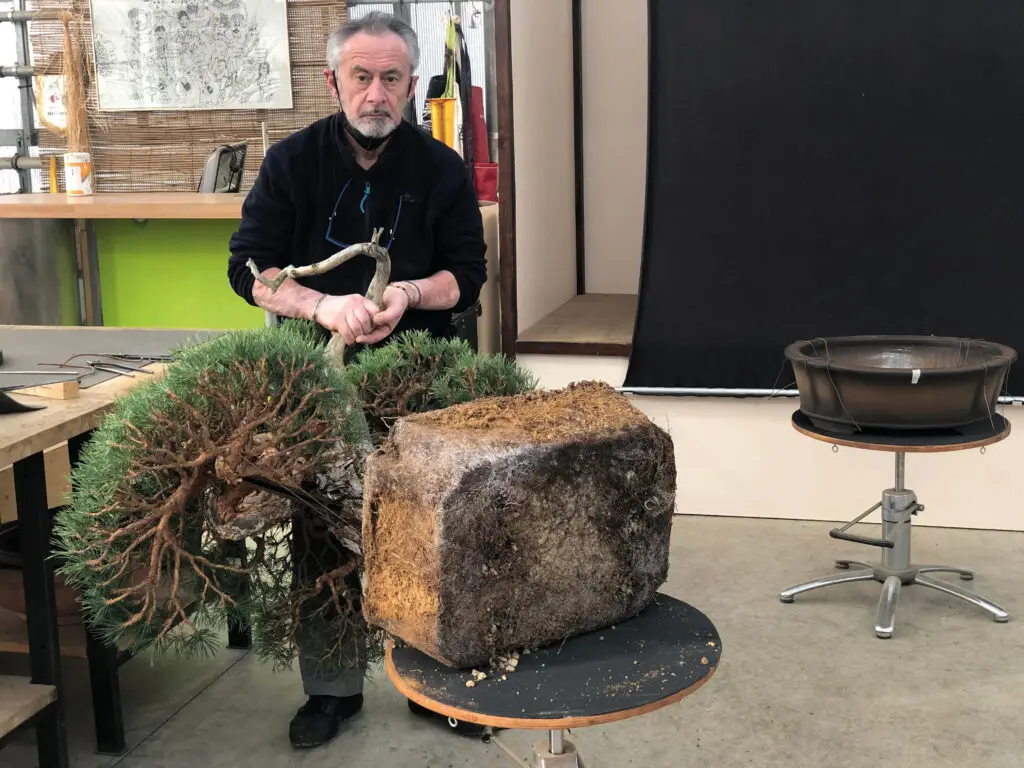
After the first repotting in 2019, the woodland
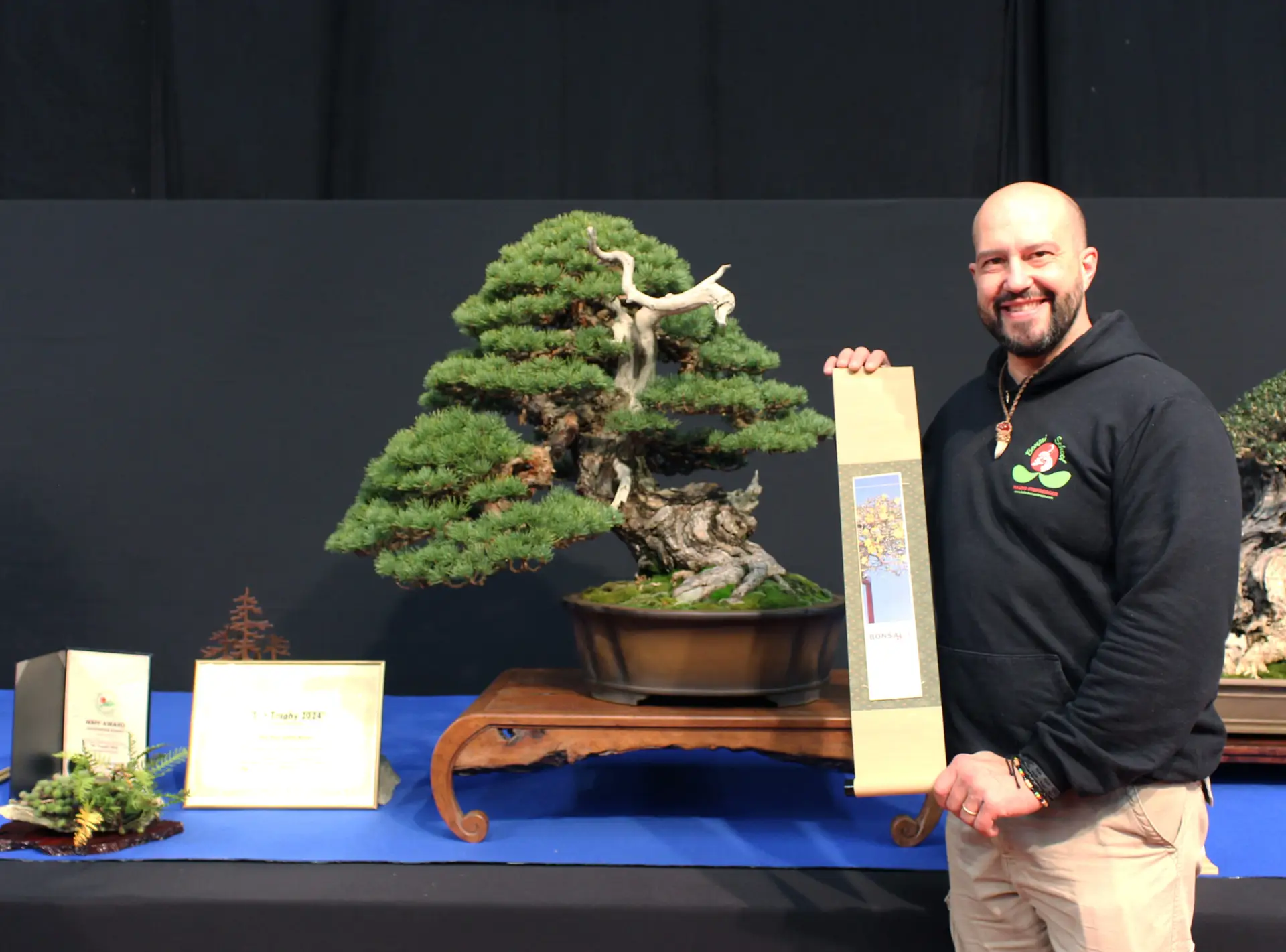
pine returned to my garden. It developed exceptionally strongly and vigorously, which is why I reworked it with my team in 2021 to refine the branch angles and foliage pads. Tension wires were also used again for this. Thick wires were no longer necessary. In spring 2022, we were able to plant the tree in its final bowl, a wonderful mocha-shaped vessel made by my friend Tiberio Gracco, the potter from Pompeii, which perfectly accentuates the pine tree with its shape and color. Now the tree was ready to be exhibited for the first time. At the Italian National Exhibition in Reggio Emilia in September 2022, it was awarded “Best Tree of the Exhibition”. At the Trophy 2024, the pine won the prize for “Best Conifer” and the BONSAI ART Award. It is extremely satisfying when you can transform raw material into a fine bonsai. This story shows that with good care, the right timing, know-how and a lot of patience, you can achieve your goal. This particular pine is particularly close to my heart and I will keep it in my collection.